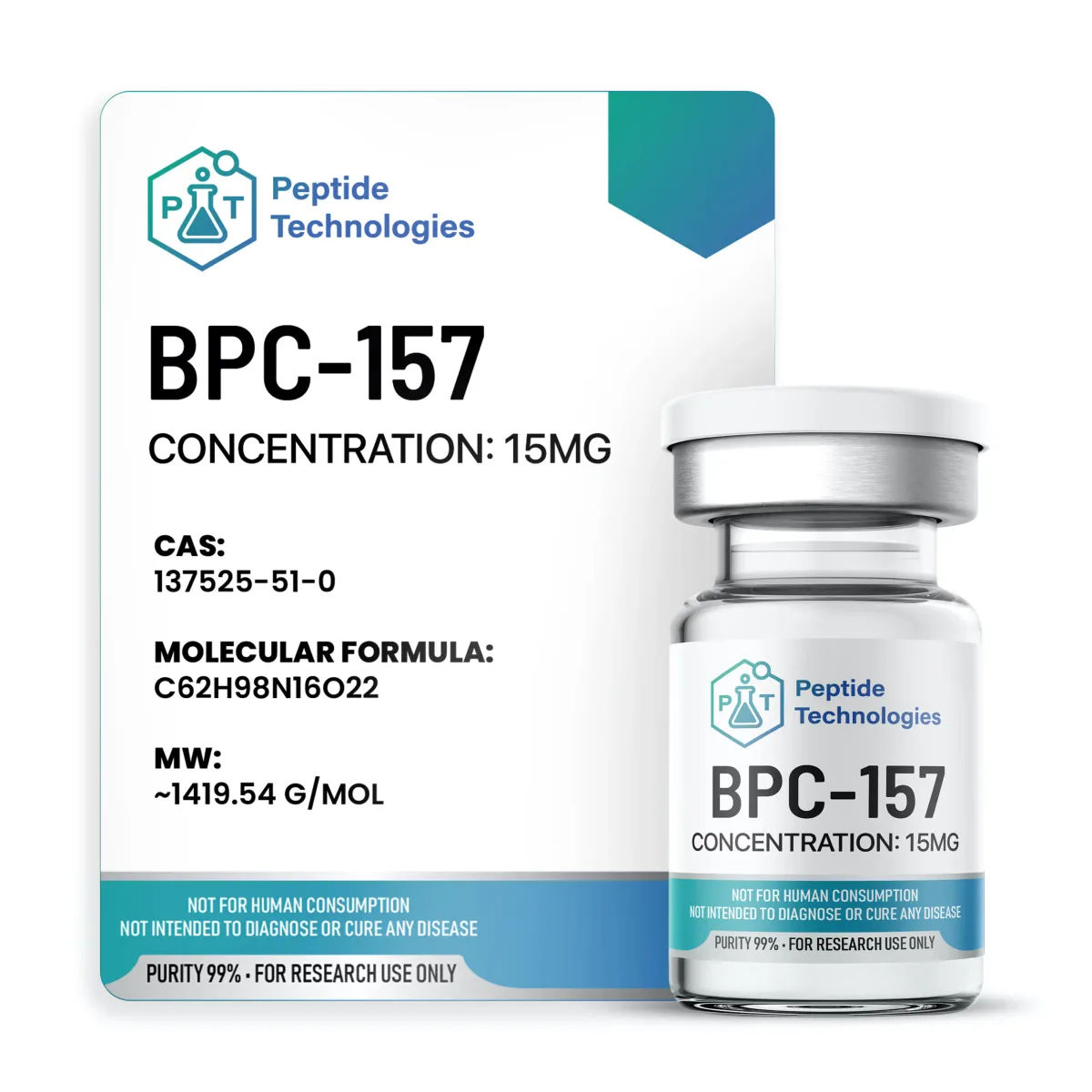
What Is BPC-157? A Complete Research Overview
BPC-157 (Body Protection Compound-157) is a synthetic pentadecapeptide — a 15-amino-acid peptide derived from a protein found in human gastric juice.
Chemical properties
- Sequence: Gly-Glu-Pro-Pro-Pro-Gly-Lys-Pro-Asp-Asp-Ala-Gly-Leu-Val
- Molecular formula: C62H98N16O22
- Molecular weight: ~1419.6 g/mol
- CAS Number: 137525-51-0
- Appearance: White to off-white lyophilized powder
What BPC-157 is studied for
In laboratory research (in-vitro and animal models), BPC-157 is studied for:
- Angiogenesis and vascular signaling
- Fibroblast and tendon cell migration
- Nitric oxide (NO) signaling pathways
- Gastrointestinal mucosal research
How BPC-157 is verified
- HPLC — purity >=99% by peak area at 220 nm
- Mass spectrometry — observed mass matching theoretical mass (~1419.6 Da)
- LAL endotoxin — below research-grade thresholds
FAQ
What is BPC-157?
BPC-157 is a 15-amino-acid synthetic pentadecapeptide derived from human gastric juice protein, studied in laboratory research for angiogenesis, fibroblast migration, and NO signaling.
Is BPC-157 a peptide?
Yes — BPC-157 is a short peptide (15 amino acids) studied in laboratory research. It is synthesized by solid-phase peptide synthesis and verified by HPLC and mass spectrometry.