Research use only. Not for use in humans or animals. All products and information on this site are provided strictly for in-vitro laboratory research purposes and are supplied as research chemicals only.
Semax vs Selank: A Research Peptide Comparison
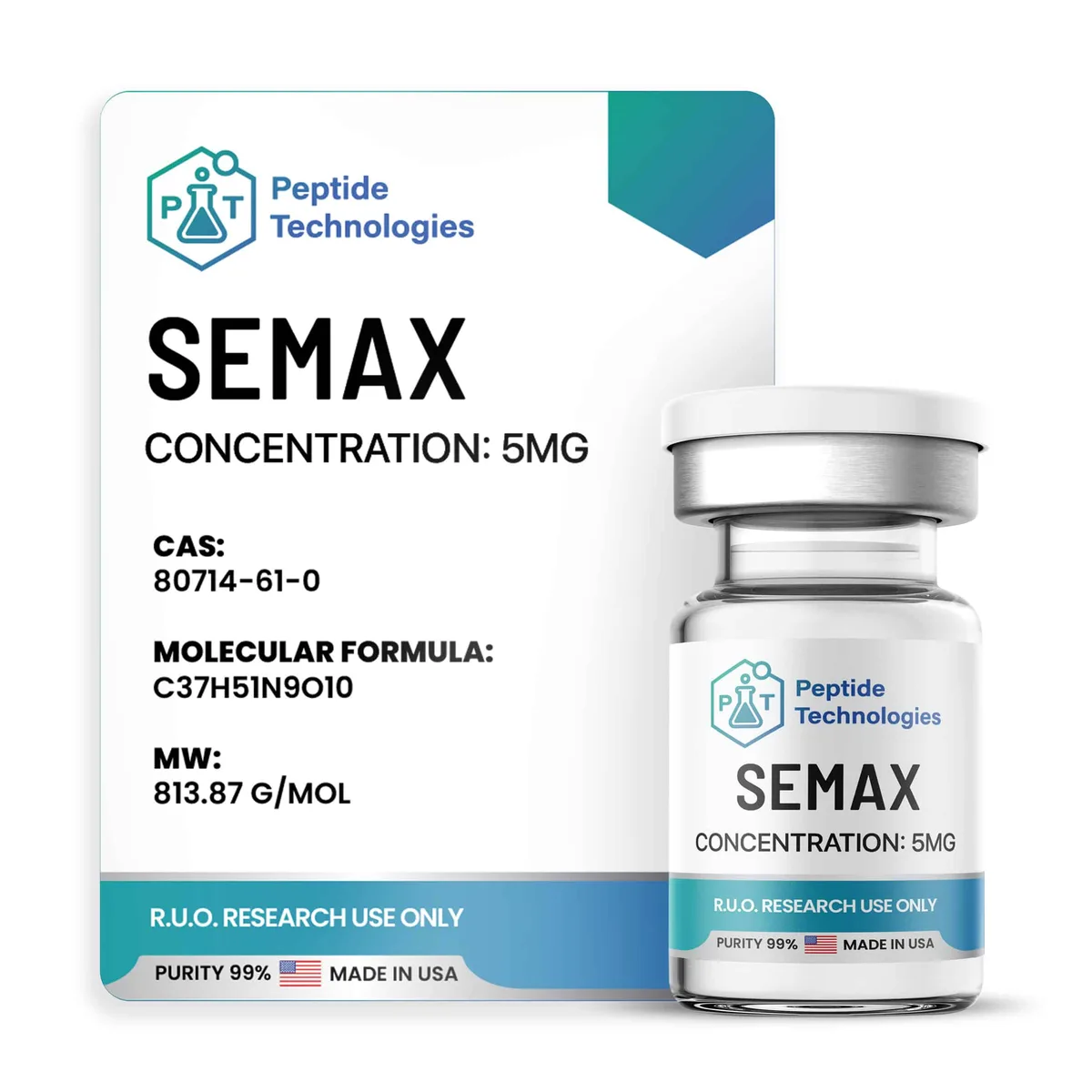
Semax and Selank are two synthetic peptides developed in Russian neuropeptide research, and they are frequently studied together. They are different molecules with different parent origins. This comparison summarises how they differ — strictly as research chemicals.
Quick comparison
| | Semax | Selank |
| --- | --- | --- |
| Parent molecule | ACTH(4-10) fragment | Tuftsin analog |
| Sequence | Met-Glu-His-Phe-Pro-Gly-Pro | Thr-Lys-Pro-Arg-Pro-Gly-Pro |
| Research area | Neurotrophic / cognitive models | Anxiolytic / neuroimmune models |
| Class | Melanocortin-derived peptide | Immunomodulatory-peptide analog |
Different origins
The core difference is the parent molecule. Semax is derived from a fragment of ACTH (adrenocorticotropic hormone), specifically the ACTH(4-10) region, and is studied in neurotrophic and cognition-model research. Selank is a synthetic analog of the endogenous immunomodulatory peptide tuftsin, and is studied more in anxiolytic-model and neuroimmune research. Both carry a stabilising Pro-Gly-Pro extension.
What each is studied for
- Semax — BDNF/neurotrophic signaling and cognition-model endpoints in research systems. Read the full Semax overview →
- Selank — GABA/serotonin-system interactions and neuroimmune endpoints in model systems. Read the full Selank overview →
Sourcing verified material
Both should ship with a lot-specific third-party COA (HPLC purity + mass-spec identity), from US synthesis, with cold-chain shipping. Browse the COA library →
FAQ
What is the difference between Semax and Selank?
Semax is derived from the ACTH(4-10) fragment and is studied in neurotrophic and cognition-model research; Selank is a tuftsin analog studied more in anxiolytic-model and neuroimmune research. They are different molecules with different parent origins.
Are Semax and Selank the same thing?
No. They are both synthetic peptides developed in Russian neuropeptide research and are often studied side by side, but they have different sequences and different parent molecules.
Can they be studied together?
Researchers do study them together in comparative neuropeptide work. Both are supplied strictly as research chemicals for laboratory use only, not for use in humans or animals.