
Comparing research peptide suppliers can get confusing fast: a coupon, a purity claim, and a certificate of analysis each tell you something different. This shortlist covers six named options and the details available for each. PeptideTech can help you compare current package prices and review supplier documentation before you decide.
We analyzed 50 YouTube comments about research peptide suppliers and found that 32% mentioned government restrictions on peptide access.
1. Ascension Peptides: A listed discount to verify at checkout
Ascension Peptides is a supplier that reports third-party product testing and a discount code. It may suit buyers who want to check a listed promotion or ask about larger-order pricing.
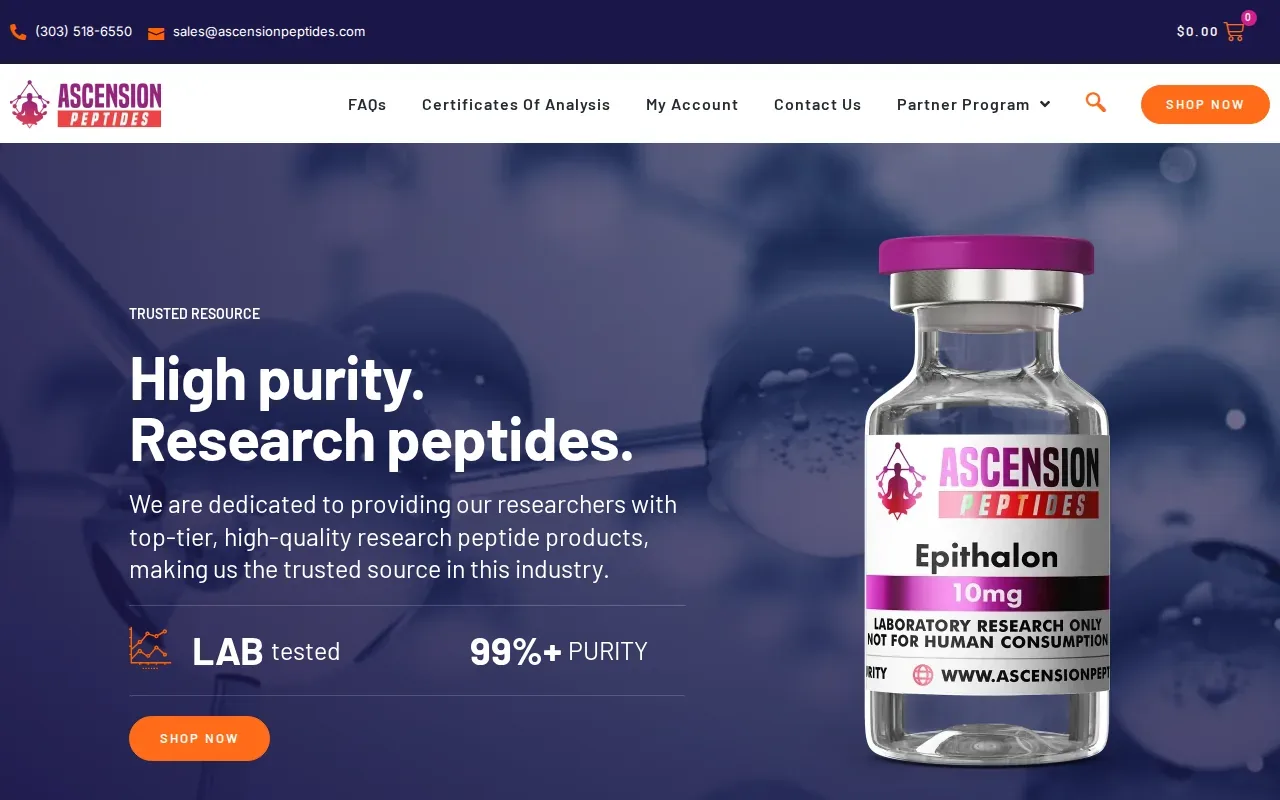
The code SCOUTER is listed as a 50% discount. Treat that as a claim to test in the cart, not as a guaranteed reduction on every product. Confirm the code applies to the exact package you need, then compare the final total after any shipping charge.
Ascension says it uses third-party testing and offers tiered pricing for wholesalers and distributors. Those statements are useful starting points, but they don't replace batch-level review. Ask for the report that matches the specific lot you plan to buy. Check its lot number and the tests it reports.
The supplier says it ships within the United States only. It also describes a broad peptide catalog and fast shipping options. For a time-sensitive project, verify the product's current availability and the expected dispatch date directly before placing the order.
A large coupon can draw attention away from the package itself. Compare the same compound identity and amount across sellers, then calculate cost per milligram using the actual price after the code applies. A cost-per-milligram comparison is useful only when the package and product form match.
For procurement records, save the cart total and the lot-specific paperwork together. A discount is a price signal, not evidence about product identity or quality.
2. 99 Purity Peptides: A supplier listing with COA availability noted
99 Purity Peptides is a supplier listing with COA availability noted and a listed order discount. It may suit buyers who want a code to test while reviewing the batch paperwork for the item in their cart.
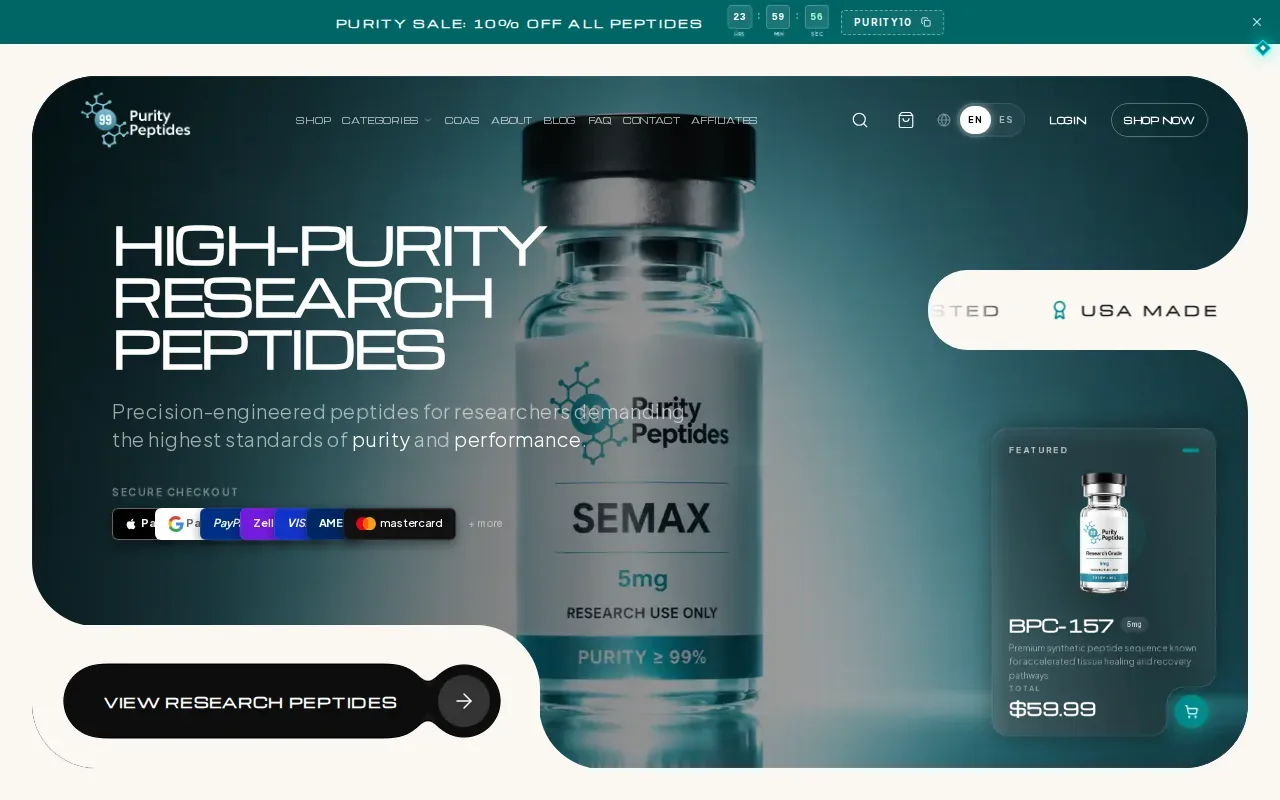
The listed code PPEPTIDESPC10 takes 10% off the order, with no minimum spend stated in the offer details. Check that the code is accepted before payment. Then record the discounted price and any shipping charge separately. A percentage discount can still leave a higher final price than another matching package.
99 Purity Peptides provides certificates of analysis. That establishes availability as a listing detail, not that every document is independent or tied to the lot offered to you. Before ordering, match the certificate's product name and batch identifier to the supplier's current item. If the report uses technical terms you don't recognize, ask what each result measures.
For any COA, separate purity from identity and measured content. HPLC is commonly used to estimate a sample's purity from its chromatogram. LC-MS can help assess molecular identity by measuring mass. Neither result alone proves the amount of peptide in a vial, sterility, or suitability for a particular research protocol.
When a study depends on a fixed amount, ask whether the report includes a measured-content result for the matching lot. Keep the supplier's stated test claims distinct from the test data visible in the document.
Researchers comparing products in a specific category can also review healing peptides for sale as a directory entry point. Confirm that a selected item matches the research identity and form you intend to evaluate.
3. PSPeptides: Compare its listed COA and coupon details
PSPeptides is a supplier listing with COA availability noted and a cart discount code. It may suit buyers who want to compare a listed offer with the final checkout price.
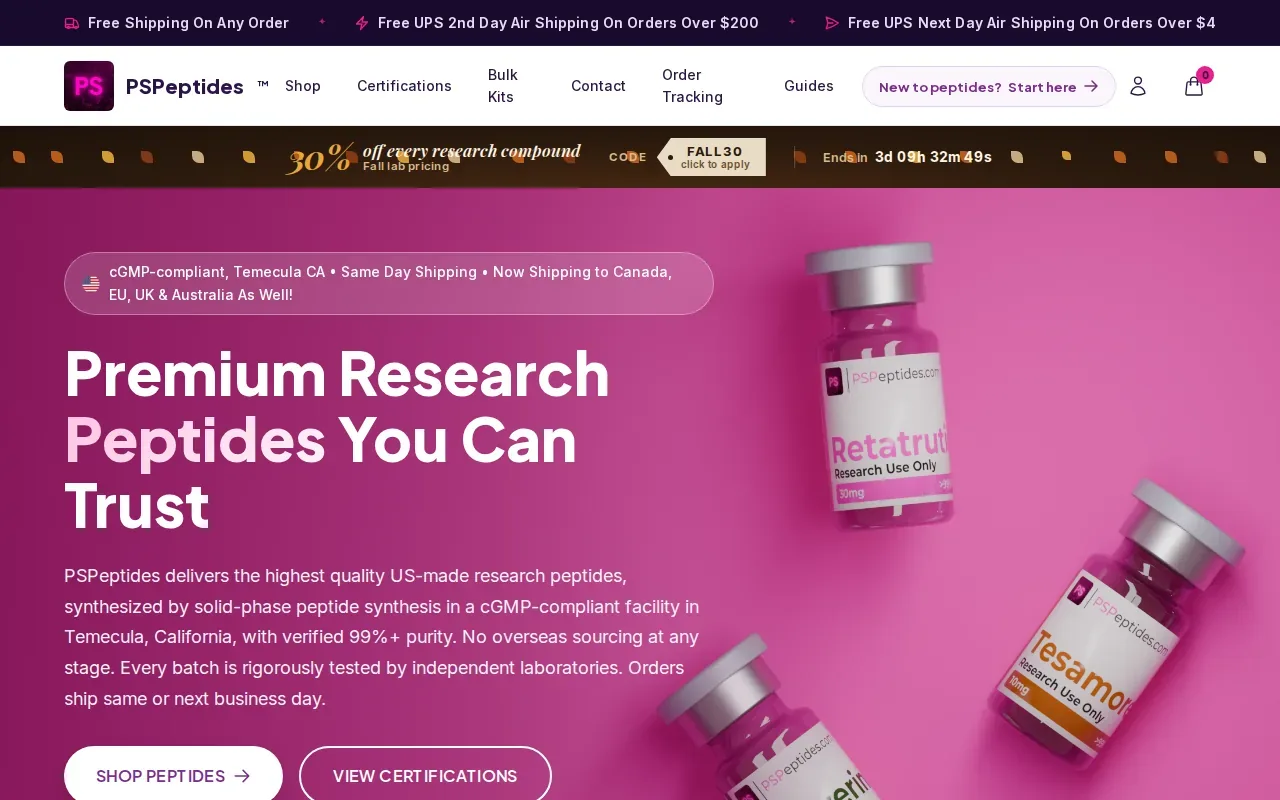
The code NOW10OFF takes 10% off the cart subtotal. Check the order summary to confirm savings rather than estimating them from the full amount due. Confirm which items qualify before you pay.
COA availability is marked “Yes.” That is a useful first filter, but a COA is only helpful for a purchase when the document matches the product and batch in question. Check for the lot identifier and test date. Read the method and result fields separately rather than treating a purity figure as proof of every quality measure.
A useful supplier comparison also separates a posted document from independent verification. A report may name a testing lab, or it may present supplier quality-control data. Those are different forms of evidence. If the document doesn't make the source or sample clear, ask the supplier to explain before relying on it for a research decision.
Compare the final package price with equivalent packages elsewhere. Don't compare a blend with a single compound or a different vial amount just because the product names look similar. Keep the code, shipping, and any other checkout costs in separate columns in your records.
For a broader view of supplier documentation, PeptideTech's supplier COA and evidence directory separates vendor-reported documents from independent verification. That distinction helps keep a supplier's claim from being mistaken for an independently confirmed result.
4. Bachem: An established peptide and oligonucleotide manufacturer
Bachem specializes in the development and manufacture of peptides and oligonucleotides. Bachem has more than 50 years of experience. It may be relevant to research groups looking at manufacturer capabilities or institutional procurement.
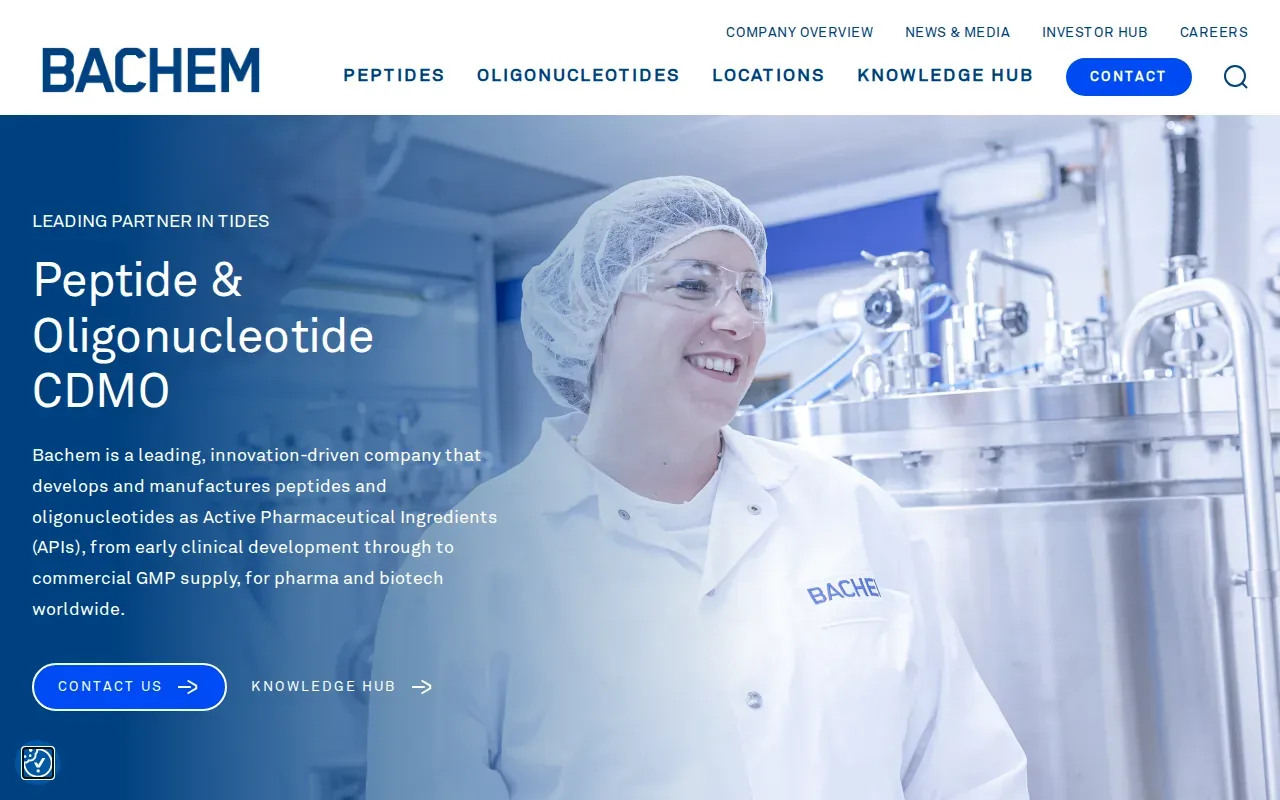
A manufacturer is not automatically a fit for every buyer or every order. First, confirm that the company can supply the exact research material, quantity, and delivery terms your project needs. Then ask what documentation comes with that specific product or batch.
For analytical records, look beyond a single purity value. Ask whether the report identifies the compound and specifies the method used. If content measurement matters to your work, verify whether that is measured separately. A purity percentage and a measured amount answer different questions.
Procurement teams should also confirm the order route and shipping conditions before comparing costs. Manufacturer quotes may not be directly comparable with retail packages. Note the quantity, product specification, shipping, and any service requirements attached to each quote.
For an exact-package comparison, use the same identity and form across suppliers. If one quote covers a custom specification while another is for a catalog item, mark that difference in the purchasing record. It may change both the price basis and the evidence you need to review.
Bachem's stated experience is useful context, but it doesn't answer the product-level questions. Make the decision against the actual specification, batch record, and terms for your purchase.
5. Asymchem: Verify research-buyer fit and product documentation
Asymchem is a contract development and manufacturing organization (CDMO) with peptide API development and manufacturing among its services. The same source describes US offices in Morrisville, North Carolina, and a business founded in 1999. It may be more relevant to institutional or business-to-business sourcing than a simple catalog purchase.
Fit matters. Ask whether the engagement is for a catalog material or a development and manufacturing project. Clarify the product specification and the documentation package for that specific work. A company-level description doesn't establish that a given item is available for your research purpose.
Asymchem has US drug master files for liraglutide and semaglutide. A drug master file is a regulatory submission about manufacturing or materials. The existence of a filing does not mean that a particular research product is approved, nor does it substitute for product-specific test records.
For any proposed material, request documentation tied to the product and lot. Check the identity, test methods, batch identifiers, and measured results that matter for your protocol. If a document describes a manufacturing process rather than a specific delivered batch, keep that distinction clear in the purchasing file.
Before comparing a CDMO quote with a retail supplier, align the scope. A development service, bulk material, and ready-to-order package are different purchasing scenarios. Their prices and delivery terms should not be put into a single cost-per-milligram ranking without explaining those differences.
Asymchem's profile is a reason to ask about project fit, not a shortcut around a product-level review. Put scope and documentation requirements in writing before moving to commercial terms.
6. CPC Scientific: Check catalog access and batch-level evidence
CPC Scientific is a named supplier option to assess when a research team needs peptide sourcing. For a specific product, contact CPC Scientific to confirm catalog access and batch documentation.
Start with the exact compound identity and form. Ask whether the requested item is a standard catalog product or requires a custom specification. Then confirm the available quantity and the documentation supplied with the lot. Those answers determine whether a price can be compared with other offers.
Request the certificate or analytical report for the relevant batch, not only a general quality statement. Check whether the report names the tested sample and provides a lot link. When a report includes HPLC or LC-MS results, note what each method supports and what it doesn't establish.
For laboratory purchasing, the handoff matters too. Record who is responsible for order terms, shipping updates, and any issue with the delivered material. These are questions to confirm with the supplier before purchase, not assumptions to make from a company name or category.
Catalog access can also shape the comparison. If an item requires a quote, compare it with other quote-based options on the same specification and quantity. Don't treat a quote for a custom synthesis as equivalent to a stock package.
Use the same evidence checklist for CPC Scientific as for every other supplier. A consistent review makes gaps in the purchasing record easier to spot before an order is placed.
Side-by-side comparison of the six research peptide suppliers
The six options differ in the purchasing and supplier information they provide. Use this table to decide what to verify next, not to treat a coupon or company profile as a quality score.
| Option | Details available here | Useful next check |
|---|---|---|
| Ascension Peptides | SCOUTER code listed at 50%; US-only shipping is described. | Test the code in the cart and match the lot report to the product. |
| 99 Purity Peptides | PPEPTIDESPC10 listed for 10% off; COA availability marked yes. | Confirm code eligibility and lot-to-COA match. |
| PSPeptides | NOW10OFF listed for 10% off the cart subtotal; COA availability marked yes. | Check the final cart discount and inspect batch identifiers. |
| Bachem | Peptide and oligonucleotide development and manufacturing; over 50 years of experience stated. | Confirm order route, product specification, and batch records. |
| Asymchem | CDMO profile includes peptide API development and manufacturing; US offices are noted. | Confirm project scope and the product-specific documentation package. |
| CPC Scientific | Named as a supplier option for review. | Ask about the exact catalog item, quote scope, and lot evidence. |
For current package prices, compare the same identity, form, amount, and market. PeptideTech shows recorded package pricing and cost per milligram for listed products; the site excerpt includes in-stock examples with different package amounts and prices. Those figures are product-specific snapshots, not universal prices or a guarantee of current availability.
Price per milligram is package price divided by total milligrams. It helps compare equivalent packages, but it leaves out shipping and other checkout charges unless you add them. A coupon should only change the calculation after the cart confirms it applies.
PeptideTech may earn through affiliate links or codes; the supplier handles the sale. Review the current price and supplier terms at checkout. A listing or referral doesn't establish delivery performance or product quality.
Availability is another separate field. An in-stock label can help with planning, but it is still wise to confirm stock before a time-sensitive order. The dated package-coverage snapshot provides context for how often exact packages have multiple current supplier listings.
A compound-specific resource may provide background on a particular compound. Keep that context separate from a supplier's claims about a product.
Frequently asked questions
How should I compare research peptide suppliers?
Compare the same compound identity, form, and package amount first. Then check current price, shipping terms, discount eligibility, and the batch documents tied to the offered lot. Keep purity, identity, and measured content separate in your notes. A coupon or company-level quality statement can't replace product-specific evidence.
Does a COA prove a peptide is suitable for research?
No, a COA is a document to assess, not a blanket guarantee of suitability. Check which sample it covers and whether its lot identifier matches the offered product. Review the reported methods and results, then compare them with your protocol's requirements. A purity result alone doesn't establish identity, amount, sterility, or performance in an experiment.
What is the difference between HPLC purity and LC-MS identity?
HPLC is commonly used to assess sample purity from chromatographic results, while LC-MS can help assess molecular identity through mass measurement. They answer different questions. Neither method, by itself, confirms every property a researcher may need. Read the report's methods and sample details rather than treating the two terms as interchangeable quality seals.
How do I compare peptide prices fairly?
Use the same product identity, form, and amount. Divide the package price by the total milligrams to calculate cost per milligram, then add shipping or other charges when comparing final costs. Apply a discount only after checkout confirms it. Don't compare a blend, a different form, or a custom quote as if it were the same package.
Does a supplier's US office mean an item ships from the United States?
No, an office location alone doesn't establish where a particular order ships from. Confirm the shipping origin, expected dispatch timing, tracking terms, and any delivery conditions for the item you plan to order. Keep the supplier's stated policy separate from a confirmed shipment estimate for your own purchase.
Conclusion
Choose based on the exact product and evidence your project needs, not the largest coupon or a broad company claim. Use PeptideTech to compare current listed packages and cost per milligram, then confirm availability, final checkout terms, and batch documentation with the supplier before ordering.